Iran Conflict Travel Impact: What You Need to Know
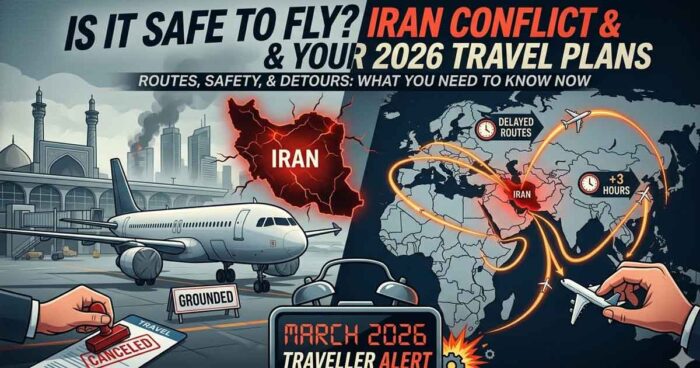
Let’s be real: we all saw the headlines this morning and immediately thought about our flight trackers, because the Iran conflict travel impact is officially the uninvited guest at everyone’s spring break party. If you were planning to sip tea in Isfahan or just fly over the region on your way to a beach in Thailand, things just got a whole lot more complicated.
Sky-High Detours and “The Long Way ‘Round”
Remember when a flight from London to Dubai felt like a quick nap? Thanks to the current situation, pilots are now taking the scenic route—and not the fun kind. With Iranian airspace effectively a “no-go” zone for most commercial carriers this March, airlines are hugging the borders of Saudi Arabia or swinging way north over Central Asia.
Think of it like a massive highway pile-up; everyone is squeezed into the same narrow side streets. What does that mean for you? Expect an extra two to three hours on your long-haul flights. Pack an extra power bank and maybe that 800-page novel you’ve been ignoring, because “direct” is a relative term right now.
Your Wallet Might Feel the Burn
We can’t talk about war without talking about the “O” word: Oil. When things get shaky in the Middle East, fuel prices act like they’ve had way too much espresso.
Are we looking at 2022-level price hikes? It’s hard to say yet, but if you haven’t booked your summer tickets, you might want to hit “buy” sooner rather than later. Surcharges are creeping back into the fine print faster than you can say “budget airline.” It’s a bit like trying to grab the last umbrella in a rainstorm—everyone wants one, and the price just doubled.
Where is it Actually Safe to Go?
I’ve been getting DMs asking: “Should I cancel my trip to Turkey? What about Egypt?”
Here’s the deal: Geography matters. While Iran itself and its immediate neighbors are seeing heavy restrictions and “Do Not Travel” advisories, places like Cairo or Istanbul are still operating, though with a much higher security presence.
- Check your insurance: Most standard policies won’t cover “I’m just nervous.”
- Watch the hubs: Dubai and Doha are still moving, but keep an eye on your gate for sudden delays.
The Silver Lining (Yes, Really)
If you’re a flexible traveler, this is the time to look West or much further East. While the Middle East corridor is a mess, routes to Southeast Asia via the Pacific or trips within Europe and the Americas are largely unaffected by the “bottleneck.”
Is it frustrating? Absolutely. But travel has always been about rolling with the punches. The world isn’t closing; it’s just rearranging the furniture.
Tips for Travelers Right Now
Planning a trip during uncertain times can feel stressful, but a few simple strategies help.
1. Book flexible tickets
Choose airlines that allow free changes.
2. Avoid tight connections
Longer flight routes mean delays are more likely.
3. Monitor airline alerts
Many carriers send updates via apps or email.
4. Consider alternative hubs
Sometimes flying through a different city can avoid disruptions.
Travel today is a little like playing chess—you just need a backup move ready.
Will Travel Return to Normal Soon?
The honest answer? No one knows yet.
Airspace restrictions can last days, weeks, or sometimes months depending on how geopolitical tensions develop.
But aviation is incredibly adaptable. Airlines constantly redesign routes to keep passengers moving safely.
Even when major air corridors close, the global travel network rarely stops completely—it simply reshapes itself.
Keep an eye on the AliExpress sale dates if you need to stock up on some noise-canceling headphones for those newly extended flights. Staying informed is your best boarding pass right now. Don’t let the news stop your wanderlust—just let it sharpen your planning.